Dialstone has developed equity and credit investment strategies that aim to give institutional investors differentiated and proprietary access to investment opportunities that combine attractive relative risk-return with the positive features associated with the infrastructure asset class. These features can include higher cashflow stability, higher income generation, inflation linkage and lower correlation to the business cycle. Dialstone’s investment strategies and sectors can be tailored to each client’s financial, risk, social and environmental objectives.
Our Strategies
Infrastructure
Equity
Investments in essential infrastructure and energy transition. Companies and assets with contracted or regulated revenues.
Infrastructure Credit: Investment Grade
Long tenor, private credit in large established issuers. Typically, investments have credit ratings in the A or BBB ranges.
Infrastructure Credit:
High Yield
Construction finance, corporate lending, direct lending and junior debt sourced via proprietary origination channels. Rated sub-investment grade.
Key sectors within UK Infrastructure
Sectors
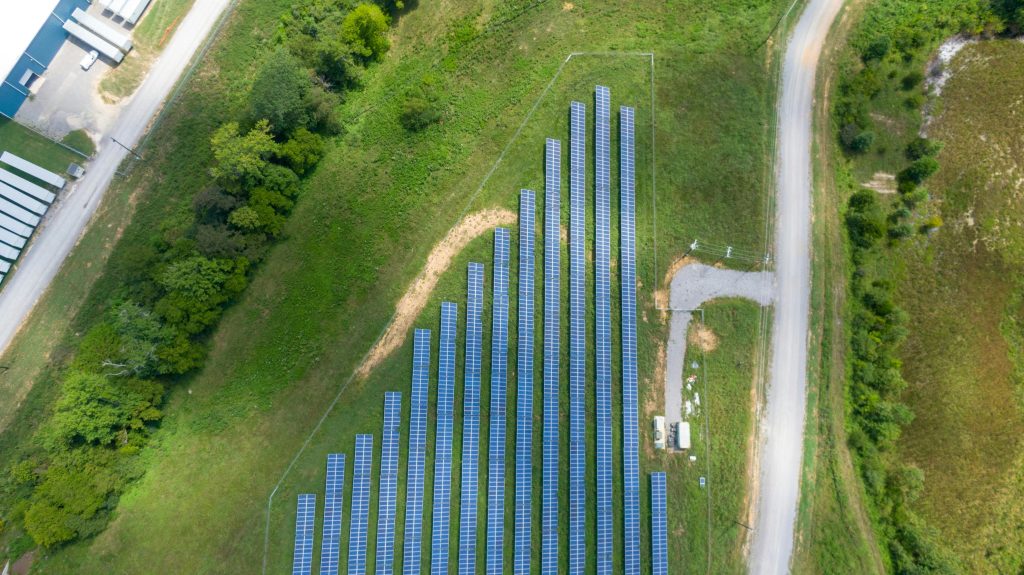
Renewable Generation
To achieve its clean power goals and the substantial decarbonisation of electricity production, the UK Government envisages ‘once-in-a-generation levels of energy investment’, including £180 billion of investment in renewable generation over the period 2025-30. The majority of this expenditure will be in offshore wind, onshore wind and solar.
Source: UK Government, Clean Power 2030 Action Plan, April 2025
Battery Storage
Battery storage plays a very important system role in offsetting the intermittent nature of renewable generation. The UK Government’s clean power ambition is to have 23-27GW of battery storage operational by 2030 relative to the 4.5GW of capacity installed as of Q4 2024.
Source: UK Government, Clean Power 2030 Action Plan, April 2025
Transmission
The UK’s National Energy System Operator (NESO) states that its clean power targets “require up to £60 billion of network investment cumulatively to 2030, to build nearly 1,000 km of onshore and over 4,500 km of offshore network and accompanying enabling works. That is more than double over five years what has been built in total in the last ten.”
Source: NESO, Clean Power 2030, November 2024
Digital
The UK’s Office for National Statistics reported that digital infrastructure investment reached £9.2 billion in 2022. Expenditure is expected to increase significantly driven by the ongoing roll-out of broadband and 5G networks as well as higher data centre demand driven by cloud computing and AI.
Transport
BCG forecasts a minimum capex demand in rail, road and airport infrastructure of £91 billion over the period 2025-29. This is a 54% increase over the prior five year period.
Source: BCG, Uplift in Demand, Shortfall in Supply: Can the UK Deliver On Its Infrastructure Investment Ambitions, February 2025
Water
In December 2024, OFWAT approved a £104 billion investment program for UK water and wastewater infrastructure for the period 2025-30, This is the largest water investment program in any five-year period since privatisation. It includes plans for new reservoirs, upgrades to wastewater treatment works, and improvements to water quality and infrastructure.
Source: OFWAT, Corporate Release, December 2024
Long-Term Infrastructure Investment
About Dialstone Capital
Dialstone is a UK-focused investment firm that originates, advises and facilitates private, long-term investments in infrastructure and energy transition. Dialstone’s thematic and geographic focus on UK infrastructure provides its clients with access to proprietary dealflow and sector insights.
This website is not a financial promotion within the meaning of Section 21 of the Financial Services and Markets Act 2000 (FSMA). The content available on this website is provided for informational purposes only and is not intended to constitute investment, legal or tax advice, an offer to sell, or a solicitation of an offer to subscribe for or purchase any investment. The distribution of information on this website should not form the basis of, or be relied upon in connection with, any contract or investment decision.
Certain content available on this website describes activities not intended for retail investors. The activities referred to are targeted at persons with professional experience in matters relating to investments.
Before proceeding to view the content of this website, viewers should fall into one of the following categories as defined under the Financial Services and Markets Act 2000 (Financial Promotion) Order 2005: